
Old Garage Door Openers in Older Garland Homes: How to Tell If Yours Predates 1993
Garland's homes are older than most in Dallas-Fort Worth. The city's median home was built in 1978, compared with 1992 for Texas as a whole, and 54.8% of Garland's homes were built before 1980 (American Community Survey 2020–2024). Most of those garages have had at least one new opener since. Some may still run an opener from before 1993, when the federal safety standard for openers took effect.
This guide explains what changed in 1993, how to tell roughly how old your opener is, and what to ask local companies if you live in an older home in Garland, Texas. It's a general guide, not an inspection, and no one checks homes for opener compliance.
What changed in 1993
Residential garage door openers manufactured on or after January 1, 1993 for sale in the United States must meet the federal entrapment protection standard, 16 CFR Part 1211. In short:
- Reverse on contact. A closing door's opener must start to reverse within 2 seconds of contact with an obstruction.
- A backup safety system. The opener also needs a secondary safety means. Photo-eye sensors near the floor are the most common. Edge sensors on the door's bottom, or a wall control you must hold down while the door closes, can also meet the standard.
An opener built before that date wasn't made to this standard. It may have a basic reverse feature, or none that works reliably, and it likely has no photo eyes at all. The U.S. Consumer Product Safety Commission adopted these rules after identifying dozens of child deaths involving garage doors in the 1980s.
How likely is a pre-1993 opener in Garland?
Hard to say for any one house. Openers typically last about 10 to 15 years (Fixr, January 2025), so a 1970s or 1980s opener would be well past its usual life by now, and most have probably been replaced. Still, the numbers suggest older equipment is more common here than in newer suburbs:
| Area | Median year homes built | Built before 1980 |
|---|---|---|
| Garland, TX | 1978 | 54.8% |
| Garland ZIP 75041 | 1965 | 88.2% |
| Garland ZIP 75042 | 1968 | 77.5% |
| Texas | 1992 | 33.2% |
| Rowlett / Sachse | 1997 / 2005 | 10.4% / 6.1% |
Source: American Community Survey 2020–2024. ZIP figures are indicative only, since ZIPs cross city lines. A house's build year says nothing certain about its opener, which may have been replaced several times.
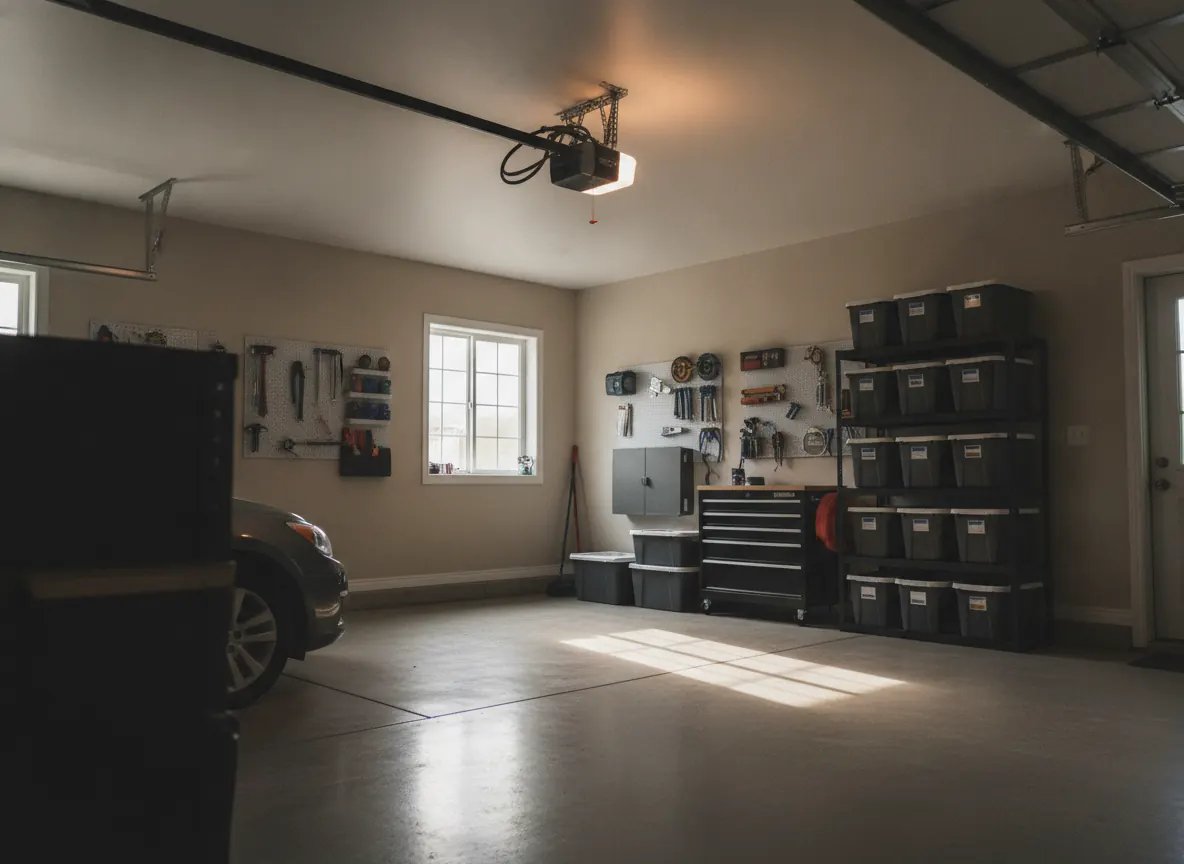
How to tell if your opener is old
You can check most of this from a step stool with the door closed and the opener unplugged or switched off. Don't touch the springs, cables or the brackets at the bottom corners of the door.
Look for photo eyes
Check both sides of the door opening, a few inches above the floor. No sensors at all is the clearest hint the opener may predate 1993, or that they were removed.
Read the label
Most opener motor units carry a label with a model number and often a manufacture date or serial number. Write it down. The company quoting your job can usually tell you the age from it.
Check the wall button
A very basic doorbell-style button with no light, and remotes with physical code switches inside, are common on older units.
Run the monthly test
Follow our garage door safety sensor test. If the door doesn't reverse when it touches a flat board, stop using the automatic close until it's checked.
If your opener fails the reverse test
Keep children and pets clear of the door, and use it manually or not at all until a technician looks at it. Don't turn up the opener's force setting to make the door close. A heavy door can point to a spring problem, and torsion springs store enough energy to cause serious injury. Leave spring and cable work to a trained technician.
Other things older garages often have
An older opener is often one of several older parts. When a technician looks at it, they may also point out:
- Old springs or mismatched springs from past repairs. See how long garage door springs last.
- Worn rollers and hinges that make the door heavy and noisy.
- No ceiling outlet near the opener. Older garages sometimes have a single bulb socket or an extension cord. If a new opener needs a new outlet or circuit, that electrical work requires a Texas-licensed electrician, and new wiring can need a city permit.
- An out-of-square opening. An uneven gap or a door that suddenly binds can have several causes, including frame or foundation movement. Mention it when you request quotes.
What a newer opener costs
| Item | Typical range | Source |
|---|---|---|
| Opener, installed | $300–$600 (avg ≈ $480) · $430–$730 | Fixr, Jan 2025 · This Old House, Mar 2026 |
| Tune-up | $120–$240 | This Old House, Mar 2026 |
| Service call / trip fee | $50–$75 | Fixr, Jan 2025 |
If you're deciding whether to fix a newer opener or replace it, repair or replace your garage door opener walks through that choice. The garage door opener repair page covers belt, chain and wall-mount openers and battery backup, and the cost guide has the full price table.
Questions to ask before replacing an old opener
- Can you tell the opener's age from the label, and does it have working auto-reverse?
- Is the door itself balanced and safe for a new opener, or does it need spring or roller work first?
- Will the new opener plug into an existing outlet, or does it need new wiring by a licensed electrician?
- Will you test the photo eyes and auto-reverse in front of me when you're done?
- What's the trip fee, and can I get a written estimate and warranty terms in writing?
To compare prices, request free quotes from independent local companies serving Garland, TX and nearby cities, or call (877) 265-2390. Garland Garage Door Experts is a free quote service, not a garage door company.
Frequently asked questions
How do I know if my garage door opener was made before 1993?
Look for photo-eye sensors near the floor on both sides of the opening; none at all is a common sign. Then check the label on the motor unit for a model number or manufacture date. A technician can usually tell the age from the label.
Do I have to replace a garage door opener made before 1993?
No one inspects homes for this. The federal standard, 16 CFR Part 1211, applies to openers manufactured since January 1, 1993. An older opener wasn't built to it, so test it monthly and consider replacing it if it doesn't reverse on contact.
How long do garage door openers last?
Most openers last about 10 to 15 years, according to Fixr (January 2025). Use, heat and maintenance affect that. An opener from the 1980s is well past that range.
Can I add safety sensors to an old garage door opener?
Usually not in a reliable way. Photo eyes are designed to work with the opener's control board, and pre-1993 units generally weren't built for them. Ask a local company whether your model supports sensors or whether a newer opener makes more sense.